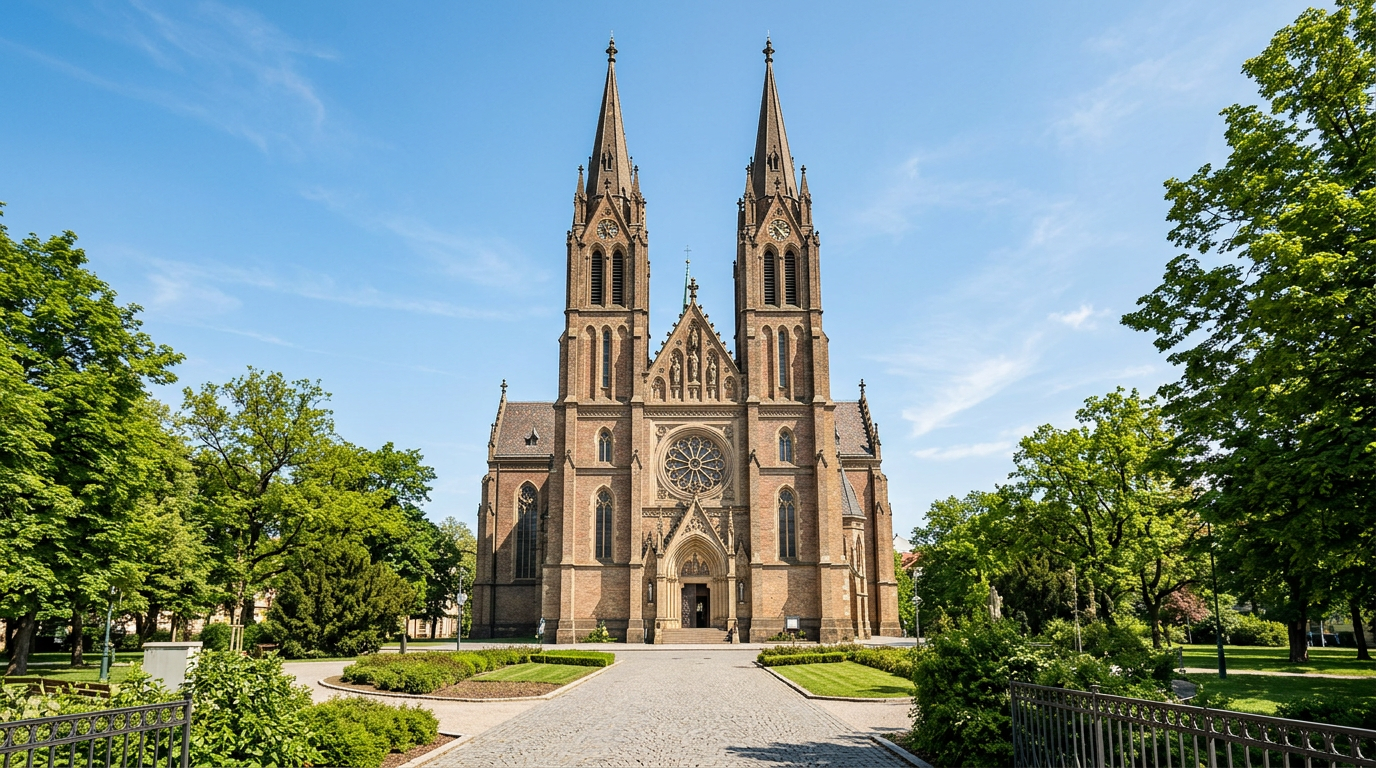
The Basilica of St. Peter and St. Paul is a stunning Neo-Gothic church situated within the historic Vyšehrad fortress in Prague. Its distinctive twin spires dominate the panoramic views of the city, making it a prominent landmark. The basilica's current appearance is largely the result of a reconstruction in the late 19th and early 20th centuries, which transformed an older Romanesque basilica into the grand structure we see today.
Stepping inside, visitors are greeted by a richly decorated interior, featuring intricate stained-glass windows, vibrant frescoes, and an impressive altar. The basilica also houses the Vyšehrad cemetery, which serves as the final resting place for many prominent Czech artists, writers, and composers, including Antonín Dvořák and Alfons Mucha, adding a layer of cultural significance to the site. The attention to detail in the craftsmanship and artistry throughout the basilica is truly remarkable.
The history of the basilica dates back to the 11th century, when a Romanesque basilica was first founded here. Over the centuries, it underwent various transformations and renovations, reflecting different architectural styles. The Neo-Gothic reconstruction aimed to evoke a sense of national pride and historical grandeur, aligning with the romantic ideals of the period.
A visit to the Basilica of St. Peter and St. Paul offers not only a chance to admire its architectural beauty and artistic treasures but also to delve into a significant chapter of Czech history and culture. Its location within the Vyšehrad complex also provides an opportunity to explore other historical sites and enjoy breathtaking views over the Vltava River.